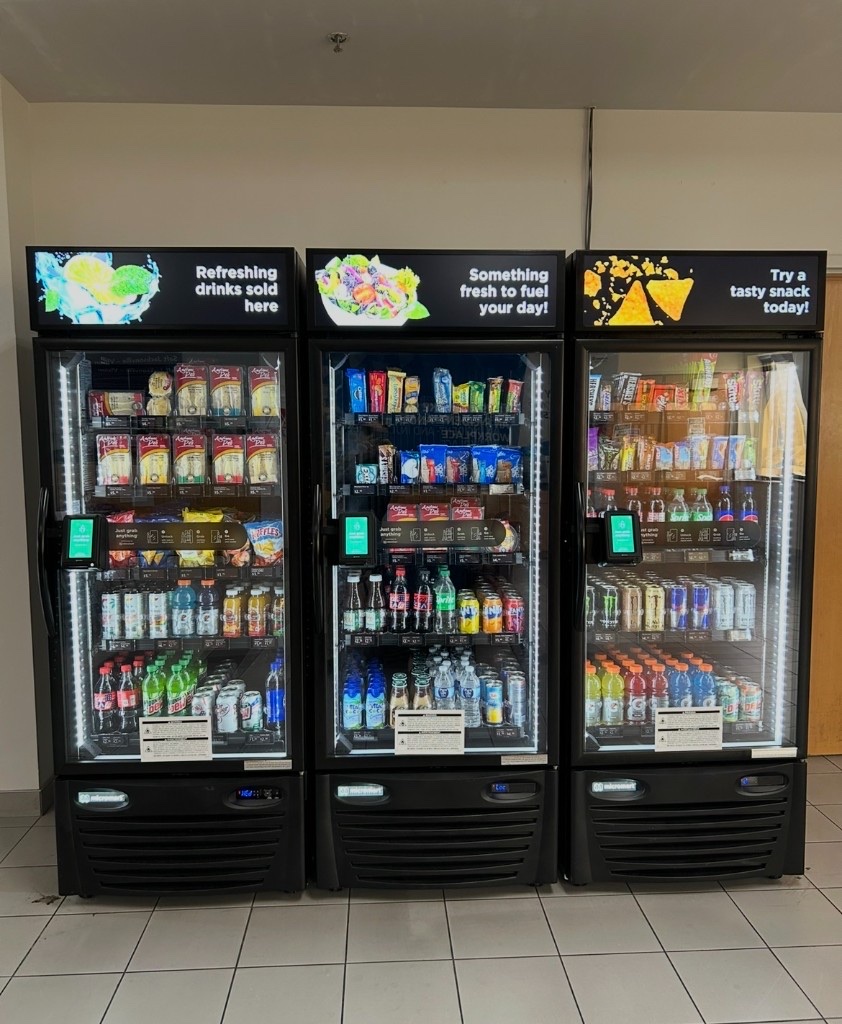
Your warehouse needs snacks and drinks when your people take a break. Before we recommend snack vending machines, drink vending machines, AI vending machines, or a micro-market, we want to understand who uses your breakroom and when. A headcount helps, but shift overlap, building access, available space, and product preferences tell us much more.
At Jacksonville Vending Machines, our VendSmart team handles installation, stocking, and maintenance for the locations we serve. This guide helps you gather the details for a useful conversation with us. You can work through it with your facilities contact and shift supervisors, then request a vending quote with a clear picture of your workplace.
We offer free vending machine placement for qualifying locations. Employees and visitors pay for the products they purchase. Office coffee, employer-paid refreshments, and optional services need their own agreed pricing; free placement does not mean every refreshment cost is covered.
Start with the people actually using the breakroom
Your total employee count can hide a very different daily pattern. Some people work remotely, some rotate between buildings, and some arrive only during seasonal peaks. Contractors may use a different entrance or break area. Tell us how many people are normally on site during each shift and which groups can reach the proposed vending area.
Ask supervisors about break timing as well as attendance. A staggered break schedule can spread purchases through the day. A shared break can bring a queue to the same checkout point. You do not need to predict exact sales before speaking with us. We need a practical starting point so the equipment and product selection reflect your daily use.
Jacksonville has a substantial logistics setting. JAXPORT lists three cargo terminals and two intermodal rail terminals. Its hours information explains that operators establish their own gated-facility hours. That distinction matters to a nearby warehouse: a port-wide description cannot tell us when your specific workplace is open. We ask about your address, gates, and shifts directly.
Make a simple worksheet before the first conversation. Include a typical weekday, a weekend day if applicable, and any known peak period. Record people present rather than assuming everyone on payroll will buy a snack. Note whether employees bring lunch, leave the property during breaks, or already use another refreshment area.
- Shift start and finish times, with the usual number of people present.
- Break windows and whether groups overlap.
- The breakroom each group can use.
- Visitors or contractors allowed to use the equipment.
- Known seasonal changes, shutdowns, or temporary crews.
Choose the vending format around the space and use
A snack vending machine and a drink vending machine can provide familiar packaged products in a defined footprint. These are useful options to discuss when your workplace mainly wants snacks, bottled water, and cold drinks. Product capacity, payment options, and clearance depend on the equipment we recommend; confirm those details before reserving a spot.
AI vending machines use locked refrigerated equipment with a purchase process that differs from traditional selection buttons. Ask us to explain the payment flow for the proposed equipment. Your employees should understand how to start a purchase, select products, finish correctly, and request help if a charge or item needs attention.
A micro-market combines open shelves, refrigerated products, and self-checkout. It can give a workplace more choice, but it also needs a suitable layout and an agreed approach to access and checkout. Space alone does not determine whether a micro-market is suitable. We review traffic, product turnover, the setting, and ongoing service access with you.
Do not treat a row of locked AI vending machines as the same setup as an open micro-market. The buying experience, available products, checkout arrangement, and use of space differ. If both could work, ask us to walk through a typical employee purchase and a typical stocking visit for each option. That makes the comparison concrete.
Your starting format can be modest. A larger selection is useful only when people buy the products and we can keep the assortment appropriate. Tell us which problem you want to solve first: drinks during short breaks, snacks on a late shift, more lunch choices, or coffee for a shared staff area. We can discuss the format that fits that need.
Check the placement and delivery route together
Measure the proposed area, but also walk the route from the delivery entrance. A doorway, hallway corner, elevator, or raised threshold can affect installation even when the final space looks generous. Send measurements and clear photos when available. We confirm the actual equipment dimensions and delivery requirements before scheduling installation.
Keep the vending area convenient without placing it in an active loading path. Employees should be able to approach, choose products, and leave with room for normal movement. Think about a queue at a shared break, a person using a mobility aid, and the route to nearby tables. Your facilities team should review the location under the requirements that apply to your building.
Tell us about outlets and available electrical service rather than assuming a nearby socket is sufficient. Refrigerated equipment needs a suitable indoor environment and ventilation according to its specifications. Your facilities contact or electrician can address building electrical questions. Confirm power, clearances, and any required building work before delivery.
Check whether the area remains accessible during every intended shift. A breakroom behind an office door may close before the evening crew arrives. A location inside a secured zone may be unavailable to visiting drivers. Match the placement to the people you want to serve, and decide how employees will find it after installation.
Also check the route we use for stocking. We need an agreed entrance, a place to bring products in, and a contact who understands the access arrangement. If your workplace requires badges, escorts, orientation, or specific protective equipment, explain that early. Access requirements belong in the service conversation, before a stocking visit is planned.
Build a selection your shifts can use
Start with preferences from each shift. A short survey can ask for favorite snacks, drinks, and dietary requests without collecting personal health information. Invite input from people who do not work office hours. Otherwise, the selection may reflect the day supervisor's preferences while missing what the evening crew actually wants.
Offer requests as priorities, not a guarantee that every brand or flavor will be stocked. Availability, shelf life, equipment compatibility, and purchases affect the mix. We listen to requests and work with you on products suited to your workplace. A small number of clearly identified favorites is more useful than a long list with no sense of demand.
Consider how products will be eaten. Someone with a short break may want a packaged snack and drink. Someone staying for lunch may ask about refrigerated food where the proposed equipment and turnover support it. Employees may need utensils or a nearby eating area for certain items. Discuss those practical details before making lunch choices the centerpiece of your request.
People with allergies or dietary needs should read the product packaging each time they buy. Selections and ingredients can change. A request for a particular product category should not become an unsupported promise that every item is suitable for every person. If your workplace has its own food policies, share those with us before the initial assortment is agreed.
Water and refreshments can be convenient at work, but vending purchases should not replace the workplace's own arrangements for employee drinking water or heat safety. Keep those responsibilities with the appropriate workplace team. Our conversation focuses on the products, equipment, and service we can provide.
Get clear about placement and ongoing purchases
Free vending machine placement is available for qualifying locations. We review the workplace and confirm the offer before installation. Daily traffic, use across shifts, space, access, and the type of equipment requested all matter. A large payroll does not automatically describe the number of people using one breakroom.
Employees and visitors pay for the snacks and drinks they buy. Ask us how product prices are displayed and what payment options the proposed equipment accepts. If your company wants to pay for some purchases or provide refreshments to employees, describe that separately so the arrangement and billing can be discussed clearly.
Office coffee service also needs a separate conversation about equipment, supplies, restocking, and pricing. A vending placement offer should not be read as a quote for coffee consumables. Estimate the people using coffee, the cups you expect during busy periods, and the person responsible for everyday tidying at the station.
Before agreeing to a setup, ask for the details that affect your business: equipment included, installation responsibilities, ongoing stocking and maintenance, access arrangements, any optional charges, and the terms for changing or ending service. Written answers help your facilities and purchasing teams work from the same information.
Make restocking workable for your building
Our team takes care of stocking and maintenance for the vending we manage. Your workplace can help by keeping the agreed access route clear and telling us when hours or attendance change. A planned shutdown, a temporary crew, or a revised break schedule can change product demand and the times we can enter.
Give us a primary contact and a backup contact. The primary contact does not need to manage every purchase. They should know who can approve access, pass along product requests, and report building changes. A backup helps when the usual contact is away or works a different shift.
Ask how employees should report a failed purchase or a payment concern. Keep that information visible near the vending area, with enough equipment identification to avoid confusion where there are several units. A useful report includes the location, the vending machine involved, the product, the time, and the problem. Employees should not send full card numbers or other sensitive payment details.
Agree on how product feedback reaches us. A shared facilities contact can collect recurring requests, while individual purchase problems may need direct support. Keep those paths understandable. If every request is passed through an unrelated department, helpful information can arrive late or lose the details needed to investigate.
Include vending in your closure communication
Jacksonville businesses should consider storm-related closures as part of wider business continuity planning. The city's JaxReady business resources provide a business continuity template. Use official instructions and your workplace's emergency plan for decisions about closures, evacuation, and safe reopening.
For vending service, identify who will tell us when the building closes and who will confirm access afterward. Share known closure times, whether building power will remain available, and any restrictions on deliveries. We should receive operational details without needing to infer your status from an unrelated public announcement.
Refrigerated products require appropriate handling when power or refrigeration is interrupted. Have your authorized workplace contact communicate the situation to us and restrict use when necessary. Let the responsible service team assess the equipment and products before they are offered again. Do not assume food is acceptable because a display has powered back on.
A stocked breakroom is also different from an emergency supply plan. Keep emergency supplies and employee safety procedures under your own continuity arrangements. Vending availability depends on building access, power, product supply, and service conditions. We can discuss vending-related communication without promising uninterrupted access during an emergency.
Introduce the setup to every shift
Before installation, tell employees where the vending will be and when they can use it. After installation, share the actual payment steps and support information. If supervisors make the announcement, give every shift the same instructions. A daytime introduction alone can leave later crews guessing at unfamiliar equipment.
Keep the message practical: where to buy, how to complete checkout, where to report a problem, and how to suggest a product. If your workplace has rules about food outside the breakroom, include those as workplace rules. Avoid attaching new promises about refunds, response times, or product availability to the launch announcement.
During the first period of use, note repeated questions and product requests. Tell us if people cannot find the equipment, if a payment instruction is unclear, or if a shift cannot reach the breakroom. Those observations are more useful than assuming a quiet day means nobody wants the service.
Review the setup again when the building changes. A second shift, a new breakroom, a different security process, or a large attendance change deserves another conversation. Equipment and product choices should reflect current use. Keeping us informed helps our team plan the service around the workplace you have now.
Your first-request worksheet
You can send a concise request without having every answer ready. Start with your workplace address or ZIP code, your role, and the best contact details. Then summarize the people present, shifts, and the refreshments you want. We will ask follow-up questions where needed and discuss whether the location qualifies.
- Location: address, building name if relevant, and proposed breakroom.
- People: typical attendance by shift, visitors, and seasonal changes.
- Refreshments: snacks, drinks, refrigerated choices, coffee, and key requests.
- Space: photos, measurements, outlet information, and the delivery route.
- Access: gates, badges, escorts, allowed visiting hours, and backup contact.
- Costs: employee purchases, any employer-paid refreshments, and services needing a separate quote.
- Timing: desired start, existing equipment commitments, and planned closures.
For example, a useful inquiry might describe a warehouse with two shifts, one shared breakroom, a gated entrance, and interest in snack and drink vending machines. It can say that attendance varies on weekends and that refrigerated lunch choices are only an initial question. This is a planning example, not a description of a VendSmart customer or a promise of eligibility.
We can work with clear, ordinary details. You do not need a polished proposal or sales forecast. Tell us what your employees need, what the building allows, and who can help us review the space. That gives us a sensible starting point for local installation, stocking, and service.
Get a quote for Jacksonville warehouse vending, or explore our warehouse vending service and restocking and maintenance. We will help you discuss the equipment, product selection, and placement conditions for your workplace.
Local sources reviewed October 5, 2026: JAXPORT facilities and operating hours; City of Jacksonville JaxReady business continuity resources. The planning examples are illustrative and do not imply a customer relationship with those organizations.